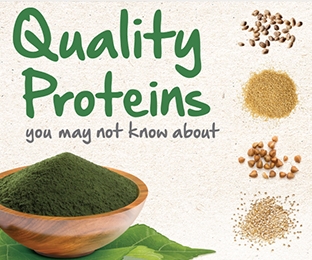
Protein is a nutrient made of amino acid…
Protein is the building blocks for many of your body’s structures, including muscle, bone, skin and hair.
Protein also plays a vital role in the creation of many substances your body requires…power for everyday life.
Meat, poultry, fish and dairy products are some of the more commonly known quality proteins…
Learn about how you can fill nutritional gaps with these versatile plant-based protein options as well.
You can enhance health building a stronger, more mobile and better body with therapeutic benefits of plant foods…
Protein is one of the most popular and controversial topics in all of nutrition.
Here are a few high quality plant-based proteins you may not know about…

Aphanizomenon Flos-Aquae (AFA)
Aphanizomenon Flos-Aquae (AFA)
A type of blue-green algae, which are a large and diverse group of simple plant-like organisms.
Aphanizomenon Flos-Aquae are found in saltwater and some large freshwater lakes.
Aphanizomenon Flos-Aquae are a great source of protein, as well as B vitamins and iron.
It was once thought plant-based proteins needed to be combined within a meal by mixing grains and legumes to create “complete” protein…
Also called complementary proteins with good amounts of all essential amino acids.
Now we know the liver can store amino acids so we don’t have to combine them in one meal.

Spirulina
Spirulina
Another micro-algae protein source.
This simple, one-celled organism has long been used by various civilizations as a nutritional supplement.
Natural sources of spirulina include freshwater lakes, streams, rivers and ponds.
Over the last 50 years ‘protein’ has become synonymous with muscle and spirulina helps to build muscle.

Hemp Seeds
Hemp Seeds
Considered highly nutritious and used in many products.
Hemp seeds are used as ground hemp flour and hemp milk.
Hemp seeds are a good source of essential fatty acids, magnesium, iron, potassium and fiber.

Buckwheat
Buckwheat
Gluten-free protein option available in the form of groats, kasha and buckwheat flour.
Buckwheat contains powerful antioxidants.
These antioxidants are called phenolics, which help protect against harmful free radicals.
How Much Protein Does a Body Need?
The overall daily protein recommendation for normal health is 0.4 grams per pound of body weight.
For example: If you weigh 150 pounds you would multiply 150 x 0.4 = 60 grams of protein for your daily need.
Older adults may benefit from a slightly higher amount of protein approximately 0.5 grams per pound of body weight.

Chia Seeds
Chia Seeds
Chia seeds are edible which come from the desert plant Salvia hispanica.
Chia seeds have grown in Mexico dating back to the Mayan and Aztec cultures.
Chia seeds are a concentrated food containing healthy omega-3 fatty acids, carbs, fiber, antioxidants and protein.

Amaranth
Amaranth
The amaranth plant is valuable for both its seeds and leafy greens.
Amaranth seeds can be ground and used as flour, while the leafy greens are filled with nutrients such as calcium and vitamins A and C.

Quinoa
Quinoa
Quinoa is truly a delicious, versatile grain that contains every amino acid.
And is particularly rich in lysine.
Quinoa is also a good source of iron, magnesium, vitamin E, potassium and fiber.
Scientific evidence continues to support the many health benefits of plant-based protein.
Plant-based protein may reduce the risks of killer diseases such as heart disease, stroke and certain cancers.
Useful in stabilising and controlling diabetes, lowering blood pressure and cholesterol.
Plant-based protein are invaluable for maintaining healthy weight, better quality of lifestyle and may add years to life expectancy via well-balanced nutrition…
High Quality Nutrition Plant-based Proteins